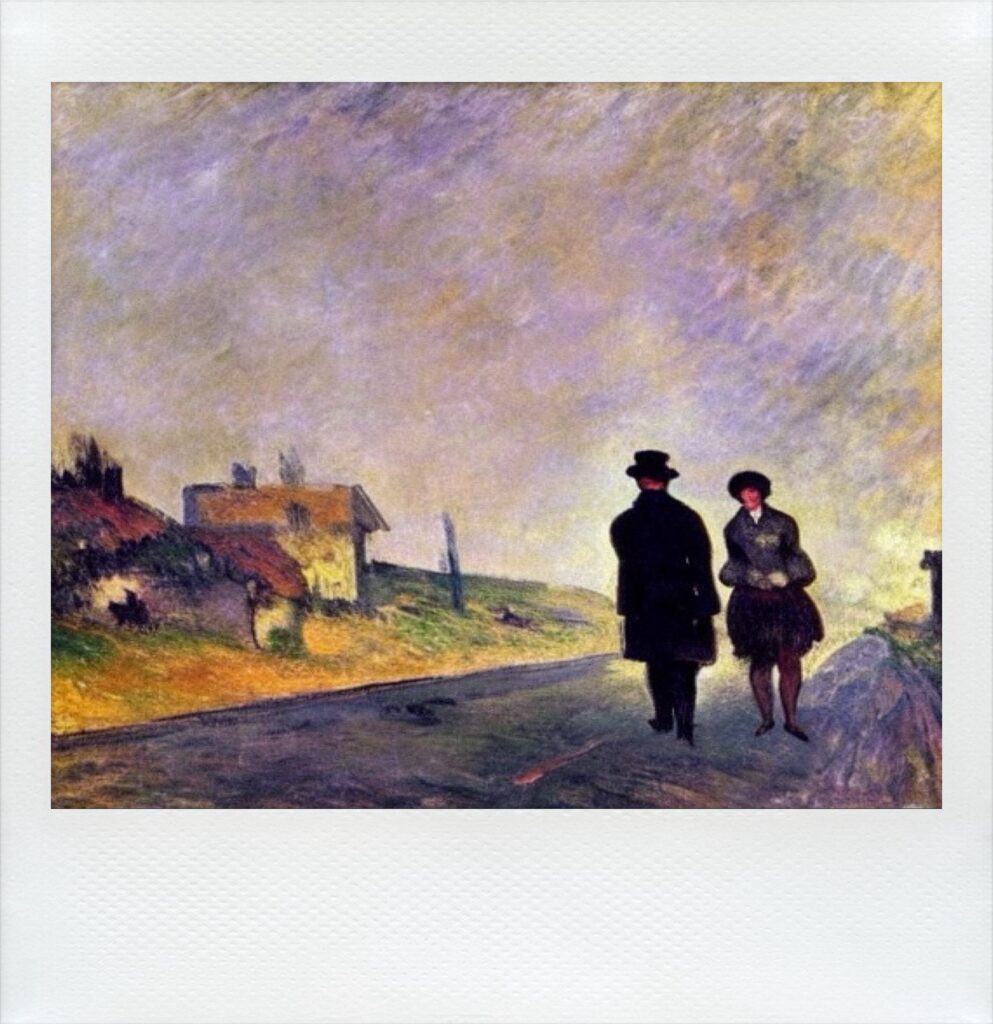
Een waterput bij een Brabantse boerderij (detail uit een ansichtkaart).
Het was die dag helemaal niet zulk slecht weer geweest. In elk geval had het niet gevroren, het was zelfs een graad of tien. De wind uit het zuidwesten bracht bewolking en van tijd tot tijd regende het wel, maar het weer was heel wat slechter geweest.
Op de laatste dag van het jaar had een zware westerstorm overal langs de Maas voor dijkdoorbraken gezorgd, en voor veel schade. Het water in de rivieren was fors gestegen; in ’s Hertogenbosch stond het ruim zes meter boven AP.
Het is net een spiraal die terug draait in de tijd. Met daarop tal van verhalen. Ik zei het al eerder.
Sommige verhalen zijn al ontdekt. Anderen liggen daar nog wel een poosje onopgemerkt. Of zijn te ver weggestopt of te klein om te zien, te onbeduidend. Of te schrijnend, te pijnlijk om te vertellen.
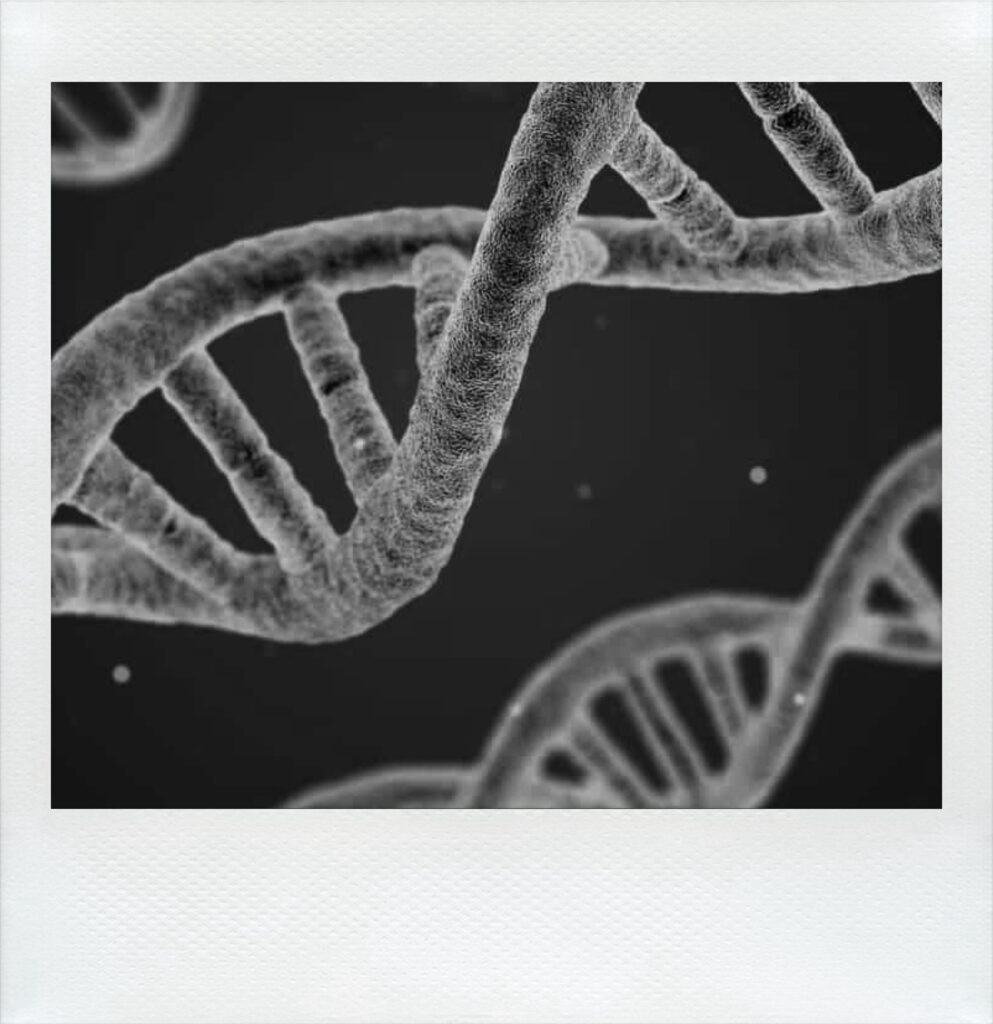
Ergens in mijn DNA zit mijn betovergrootvader verstopt.
DNA is een vreemd ding. Het is net een spiraal die terugdraait in de tijd. Met daarop tal van verhalen.
Sommige verhalen zijn al ontdekt. Anderen liggen daar nog wel een poosje onopgemerkt. Of zijn te ver weggestopt of te klein om te zien, te onbeduidend. Of te schrijnend, te pijnlijk om te vertellen. Dat kan natuurlijk ook.
Elke familie kent wel zulke verhalen. Die van mij ook. En daar zitten wel wat wonderlijke verhalen tussen.
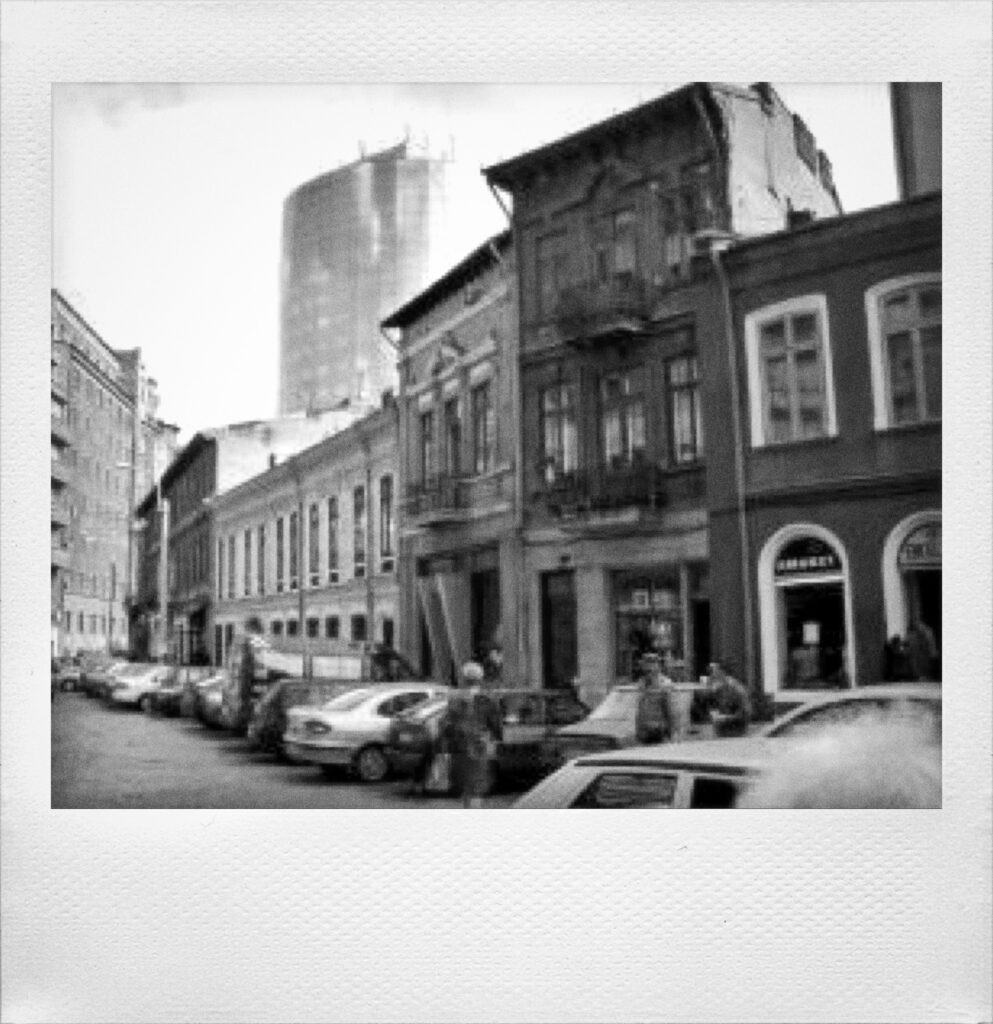
Bucharest, Romania – March 1992. Halfway through a tiring train journey across Europe, a stop in Bucharest becomes an unexpected encounter with recent history, with a Romanian with ‘a little problem,’ and with ‘she’s really quite crazy’ Puka.
1. The Border
The Bucharest station lies frozen solid. Waiting trains – cold and uncomfortable – are lined up in Spartan formation on the March morning; their noses aligned to the west. Grubby, unshaven men loiter on the platforms. “Need a room mister? Chance money mister?”
They mumble and speak casually in passing, while looking around suspiciously. As if the Securitate, the secret police, still watches everyone. Drunk invalids on crutches drag themselves along. They are as grey as the dilapidated station and stand out sharply against uniformed groups of officers who – in various shades of vigilant blue – occasionally appear in the station.
I had left the Netherlands two days earlier and transferred in Cologne to the fast Danube Courier via Vienna to Budapest. The international allure faded away in the Hungarian capital. The journey continued with an anonymous train carriage to Bucharest, Romania. Four border crossings after leaving the Netherlands, and many hours later, I wearily hoisted my 25-kilogram heavy backpack at Gara de Nord station and left the train. I was on my way to Varna on the Bulgarian Black Sea coast for a series of articles. Bucharest was meant to be a stop; a short layover like Cologne, Vienna, and Budapest.
But the last part of the journey to Romania was disappointing. In Lőkösháza, the Hungarian railway station at the border with Romania, the train was swarmed by an overpowering presence of customs, militia, and military personnel. Romanian citizens were brutally and rudely removed from the train. Some passengers were led off to a wooden barrack alongside the rails and left there. Soldiers came in and out, rifles slung over their backs.
The snow along the rails was dirty from the many footprints of shunters and soldiers. Outside, it was freezing at around ten degrees. Up to this point, at the border, I had shared the unheated, icy compartment with a thin boy of about twenty. He had stumbled into the compartment in Budapest with two full large plastic bags, an old-fashioned black-checkered suitcase, and an empty look in his eyes. “Shop wisely, Woolworth’s” proclaimed one of the plastic bags. Conversation didn’t flow. The boy was only interested in the contents of his bags, which were checked and almost caressed regularly. He hurriedly emptied a bag of nuts.
In Lőkösháza, he was taken off the train, and I lost sight of him.
Varna, Bulgaria, winter and summer 1992 – From shutdown nuclear power plants and candlelit vodka to Baba Marta and the US Navy, sailing to pasta on a driveway and singing fishermen as the sun sets.
1. Mare Incognitum
“How many miles are between Varna and Sarajevo? Can you hear the bombs over there?”
Chairman Hristo Tzetvkov of the local water sports club looks a bit disheartened. In the clubhouse of the marina in Varna, Bulgaria, he repeats the question from a foreign yacht owner. Earlier this year, this owner wanted to know if ’the Black Sea was actually safe’. Hristo shrugs again, discouraged by so much lack of understanding.
A few sailors agree with him. “You know what it is?” says Vladimir Troitsky, skipper of the Russian yacht Hermes and currently a guest in the Bulgarian port city, “Black Sea sounds negative, dangerous. People have no idea what can be found here. For Western Europeans, the Black Sea is Mare Incognitum.”
It’s mid-June 1992. The beginning of this last decade, like the end of the previous one, has been tumultuous in Europe. In November 1989, the Berlin Wall opened. And last year, the Soviet Union dissolved into fifteen separate republics. Almost seventy years after the formation of the USSR, these states have to navigate the slippery path of democracy and capitalism. Or stubbornly cling to the red flag and state control. Or search for something in between.
The same applies to former members of the Warsaw Pact; countries like East Germany, Romania, Bulgaria, and Yugoslavia. The latter is a particularly sad case. After the death of Tito in 1980, the country had already disintegrated into different constituent republics. Ethnic conflicts and rising nationalism in various regions in the following years paved the way for civil war and genocide.
Two months ago, over 700 kilometres away, about thirteen hours by car, the siege of the Bosnian capital Sarajevo began. The Bosnian Serb forces under President Radovan Karadžić had surrounded the city. The other two ethnic groups in Bosnia, the Bosnian Croats and the Bosniaks, had, in the majority, voted in favour of secession from the Federal Republic of Yugoslavia and the establishment of an independent Bosnia and Herzegovina in a February referendum.
In response, the Bosnian Serbs boycotted the referendum and established their own Republic of Srpska, under Karadžić’s leadership. What follows will go down in history as the Bosnian War. A few days after the outcome of the referendum is approved, the Bosnian Serbs besiege Sarajevo. This siege will last nearly four years and cost over 12,000 civilian lives in Sarajevo alone. In total, about 140,000 people will lose their lives during the Yugoslav Wars.
It’s all far from Varna, on the Black Sea. At the beginning of summer, the port city basks in relative tranquility. After Sofia and Plovdiv, it is the third-largest city in the country with over three hundred thousand inhabitants and (after Burgas) the second-largest port in Bulgaria.
It’s my second visit this year, curious about a country that had been virtually sealed off for most Westerners for decades. The previous visit was a few months ago and still fresh in memory. It was the end of winter, bitterly cold, and mostly dark.
“You really need to come back. But this time in summer”, everyone said.
Bukarest, Roemenië – maart 1992. Halverwege een vermoeiende treinreis dwars door Europa is een oponthoud in de hoofdstad van Roemenië een onverwachte ontmoeting met de recente geschiedenis, met een Roemeen met ‘a little problem’ en met ‘ze is echt heel gek’ Puka.
Eindelijk arriveert mijn trein. Opgelucht dat ik verder kan, stap ik in. Petru loopt mee, schiet voor ik er erg in heb een conducteur aan en stopt hem een pakje sigaretten toe, speciaal voor dit doel meegegeven door Ileana. Hij vraagt hem een oogje op me te houden omdat ik alleen reis.
De eerste coupé bij de ingang is leeg en voor mij. ‘”Neem deze. Hier zit tenminste niemand,” zegt Petru. Een grote baardige man – bontmuts, gewatteerd legerjack – spreekt hem op de gang aan. Uit Petru’s reactie maak ik op dat hij zegt dat ik uit Holland kom. Ik schenk er geen aandacht aan. Plotseling staat Petru voor me, zegt dat het tijd is om afscheid te nemen. Hij omhelst me, vraagt nog eens om alsjeblieft terug te komen. En stapt na mijn belofte gerustgesteld uit.
De trein zet zich in beweging en ik zak onderuit. Klaar om me over te geven aan het verwerken van alle indrukken van de afgelopen uren. Voor ik er goed en wel erg heb, komt het baardige legerjack van zo-even de coupé in. Nog even denk ik een reisgenoot te krijgen, totdat hij me met zijn linkerhand en volle gewicht in de bank drukt om met zijn andere hand in de binnenzak van mijn jas te verdwijnen. Ik probeer me te verweren maar hij moet minstens tachtig kilo wegen. Ik kan geen kant uit. En vloek en scheld zo hard ik kan.
Mijn hulpgeroep leidt tot gestommel in de aangrenzende ruimte. Terwijl de trein vaart krijgt, schiet mijn overvaller – zonder buit – naar de uitgang en springt de duisternis in. Ik hoop op een doodsmak.
Geschrokken doe ik even later mijn verhaal aan een hoofdschuddende conducteur. Twee te hulp geschoten jongens uit Albanië nodigen mij prompt in hun coupé uit. Zij zijn nog bozer dan ik en schelden op alles wat Roemeens is. Hun woede neemt alleen maar toe wanneer de conducteur even later met zijn collega komt vragen om de reserveringen. Ze proberen onhandig wat geld los te peuteren. Een van de jongens wijst op de gescheurde bekleding, het afval op de vloer, de opgelapte rotzooi. “We hebben nu al meer dan zestien uur vertraging, man. Kijk om je heen. Dit is de Sing Sing Express. Je krijgt geen cent!”
De conducteurs druipen af, de jongens mopperen na. Van lieverlee zakt ook mijn woede, om plaats te maken voor een paar vragen. Waarom was Petru zo enthousiast? Omdat ik uit Nederland kwam en met Puka kon praten? Dat leek me niet logisch. Zoveel bijzonders had ze niet gezegd. Of was dat helemaal niet belangrijk? Was ik door die Roemeen van lieverlee gehaaid in slaap gesust en tot een makkelijk slachtoffer gemaakt? Want wat had hij nou precies tegen baardmans gezegd?
Terwijl de vragen zich aaneen regen, dommelde ik langzaam in. Een ding stond wel vast. Ik zou nooit meer een voet in Roemenië zetten.
Terug in het appartement leefde iedereen mee met mijn zorgen om op tijd in Bulgarije te zijn. Samen met Petru was ik nog even in het station geweest om te kijken of er al schot in de zaak zat. Afgezien van vier man militie die iemand in elkaar beukten, viel er weinig te beleven. Mijn trein zou op zijn vroegst pas rond middernacht vertrekken.
We keken tekenfilms en de soap Dallas en zagen een flauwe Jean-Paul Belmondo in een drakerige gooi-en-smijtfilm. De familie reageerde met kinderlijke blijheid en vond alles even prachtig, trots op de westerse zegeningen. “Vroeger? Ah, dat was niks. Nu is het veel beter ja?”, zei Petru terwijl hij de kleurentelevisie demonstreerde en zenders afzocht.
Er werd een collega gebeld, in het rijke bezit van een auto. Ik was graag bereid om te betalen. Of hij mij naar Varna kon rijden? “Als je nu vier of vijf uur eerder had gebeld, toen had ik nog niets gedronken. Ik mag nu echt niet meer rijden. Als de politie mij pakt, kom ik in grote moeilijkheden. Dat kan me mijn baan kosten.”
Een taxichauffeur buiten op straat durfde het evenmin aan. Tot de grens was geen probleem. Maar verder? “No mister. Ze laten me er nooit door.”
Petru’s familie begon zich inmiddels oprecht ongerust te tonen. Ileana trok in elk geval een diepe frons toen ze hoorde dat ik ’s nachts alleen verder zou reizen. Ze gaf tips via Puka en Petru. “Zoek in elk geval iemand op die er een beetje betrouwbaar uitziet en ga daarbij in de coupé zitten. Of nog liever: zoek een groepje op. En pas op voor zigeunertypes.”
‘Dsjapdserap’, zo klonk de uitdrukking die ze gebruikte voor beroving.
Uiteindelijk bracht Petru me naar het station, maar niet nadat er vriendelijk afscheid was genomen en adressen waren uitgewisseld. Ik moest plechtig beloven om op de terugweg langs te komen. Op het station was nog tijd voor een kop koffie. Petru haalde wat snoep voor mij. “Voor onderweg.”