
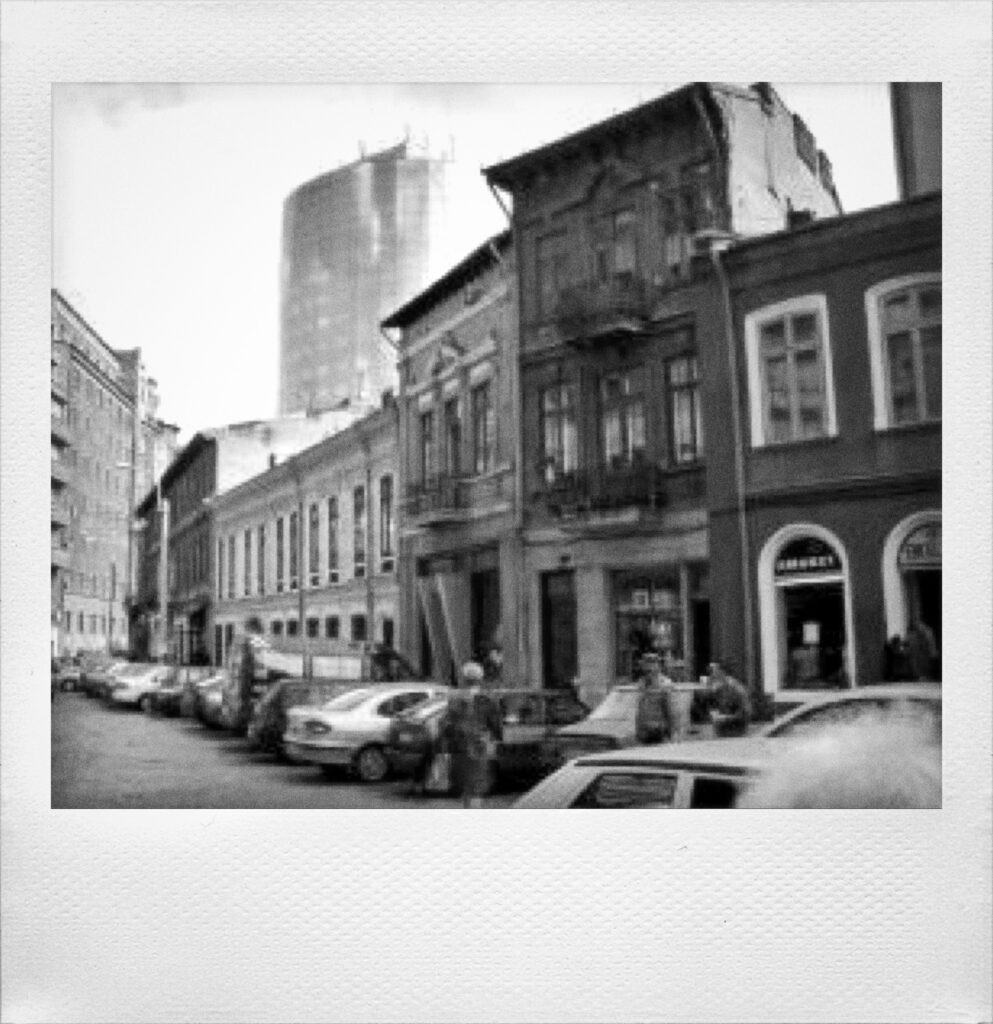
Bucharest, Romania – March 1992. Halfway through a tiring train journey across Europe, a stop in Bucharest becomes an unexpected encounter with recent history, with a Romanian with ‘a little problem,’ and with ‘she’s really quite crazy’ Puka.
1. The Border
The Bucharest station lies frozen solid. Waiting trains – cold and uncomfortable – are lined up in Spartan formation on the March morning; their noses aligned to the west. Grubby, unshaven men loiter on the platforms. “Need a room mister? Chance money mister?”
They mumble and speak casually in passing, while looking around suspiciously. As if the Securitate, the secret police, still watches everyone. Drunk invalids on crutches drag themselves along. They are as grey as the dilapidated station and stand out sharply against uniformed groups of officers who – in various shades of vigilant blue – occasionally appear in the station.
I had left the Netherlands two days earlier and transferred in Cologne to the fast Danube Courier via Vienna to Budapest. The international allure faded away in the Hungarian capital. The journey continued with an anonymous train carriage to Bucharest, Romania. Four border crossings after leaving the Netherlands, and many hours later, I wearily hoisted my 25-kilogram heavy backpack at Gara de Nord station and left the train. I was on my way to Varna on the Bulgarian Black Sea coast for a series of articles. Bucharest was meant to be a stop; a short layover like Cologne, Vienna, and Budapest.
But the last part of the journey to Romania was disappointing. In Lőkösháza, the Hungarian railway station at the border with Romania, the train was swarmed by an overpowering presence of customs, militia, and military personnel. Romanian citizens were brutally and rudely removed from the train. Some passengers were led off to a wooden barrack alongside the rails and left there. Soldiers came in and out, rifles slung over their backs.
The snow along the rails was dirty from the many footprints of shunters and soldiers. Outside, it was freezing at around ten degrees. Up to this point, at the border, I had shared the unheated, icy compartment with a thin boy of about twenty. He had stumbled into the compartment in Budapest with two full large plastic bags, an old-fashioned black-checkered suitcase, and an empty look in his eyes. “Shop wisely, Woolworth’s” proclaimed one of the plastic bags. Conversation didn’t flow. The boy was only interested in the contents of his bags, which were checked and almost caressed regularly. He hurriedly emptied a bag of nuts.
In Lőkösháza, he was taken off the train, and I lost sight of him.